sábado, 9 de octubre de 2021

Order of modifiers and linking words for connecting constrating ideas


Connecting constrating ideas


Although/though

Although/though can be used to contrast ideas. Although/though are subordinating conjunctions used to connect a subordinate clause to a main clause, like after, as, before, if, since, that, even though, even if.


Even thougheven if

Even though and even if are also used as subordinating conjunctions in the same way as although/though. Even though is similar to although but it makes a stronger contrast:


Despite / in spite of
We use 'despite' or 'in spite of' before a noun or a gerund. It can also go in the middle or at the beginning of a sentence. 'Despite' and 'in spite of' mean exactly the same thing. You can choose whichever one you like! If you want to use 'despite' or 'in spite of' before a clause, you need to add 'the fact that'.


However
We use 'although' and 'despite / in spite of' to connect two clauses in the same sentence. On the other hand, 'however' isn't used to connect two clauses. Instead, we usually put the two ideas in two separate sentences. We put 'however' in the second sentence, and we can put it at the beginning, at the end, or after the subject.


Nevertheless

We can use either of the adverbs however or nevertheless to indicate that the second point we wish to make contrasts with the first point. The difference is one of formality: nevertheless is bit more formal and emphatic than however.


on the other hand

used to introduce a statement that contrasts with a previous statement or presents a different point of view.


Mind Map

What is a Mind Map?


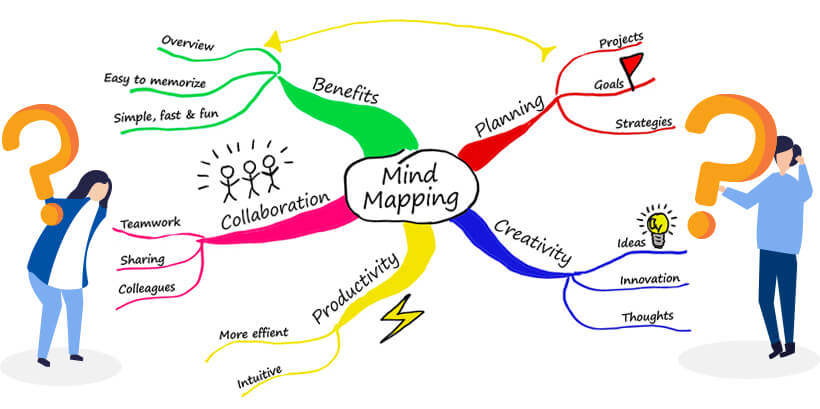
 A Mind Map is an easy way to brainstorm thoughts organically without worrying about order and structure. It allows you to visually structure your ideas to help with analysis and recall.

A Mind Map is a diagram for representing tasks, words, concepts, or items linked to and arranged around a central concept or subject using a non-linear graphical layout that allows the user to build an intuitive framework around a central concept. A Mind Map can turn a long list of monotonous information into a colorful, memorable and highly organized diagram that works in line with your brain's natural way of doing things.


What is a Mind Map?


sábado, 2 de octubre de 2021

Student's book page 20


Student's book page 19


Non-defining relative clauses

                  Non-defining relative clauses


Non-defining relative clauses give us extra information about someone or something. It isn't essential for understanding who or what we are talking about.

My grandfatherwho's 87, goes swimming every day.
The house, which was built in 1883, has just been opened to the public.
The award was given to Sara, whose short story impressed the judges

We always use a relative pronoun or adverb to start a non-defining relative clause: whowhichwhosewhen or where (but not that). We also use commas to separate the clause from the rest of the sentence.

whowhich and whose

We can use who to talk about people, which to talk about things and whose to refer to the person or thing that something belongs to.

Yesterday I met my new boss, who was very nice.
The house, which is very big, is also very cold!
My next-door neighbour, whose children go to school with ours, has just bought a new car.
After the port there is a row of fisherman's houses, whose lights can be seen from across the bay.

Places and times

We can use which with a preposition to talk about places and times. In these cases it's more common to use where or when instead of which and the preposition.

City Park, which we used to go to, has been closed down.
City Park, where we used to go, has been closed down.
December, which Christmas is celebrated in, is a summer month for the southern hemisphere.
December, when Christmas is celebrated, is a summer month for the southern hemisphere.

However, when we use which without a preposition, we can't use where or when.

Centre Park, which we love, is always really busy on Saturdays.
February, which is my favourite month, lasts 29 days this year.

Defining and non-defining relative clauses

                         Defining relative clause


Relative clauses give us information about the person or thing mentioned. 

Defining relative clauses give us essential information – information that tells us who or what we are talking about.

The woman who lives next door works in a bank. 
These are the flights that have been cancelled.

We usually use a relative pronoun or adverb to start a defining relative clause: whowhichthatwhenwhere or whose.

who/that

We can use who or that to talk about people. that is more common and a bit more informal.

She's the woman who cuts my hair.
He's the man that I met at the conference.

which/that 

We can use which or that to talk about things. that is more common and a bit more informal.

There was a one-year guarantee which came with the TV.
The laptop that I bought last week has started making a strange noise!

Other pronouns

when can refer to a time.

Summer is the season when I'm happiest.

where can refer to a place.

That's the stadium where Real Madrid play.

whose refers to the person that something belongs to.

He's a musician whose albums have sold millions. 


https://learnenglish.britishcouncil.org/grammar/intermediate-to-upper-intermediate/relative-clauses-defining-relative-clauses


Order of modifiers and linking words for connecting constrating ideas

  Connecting constrating ideas Although / though Although/though  can be used to contrast ideas.  Although/though  are subordinating conjunc...